What the Hydra Alien arm actually does
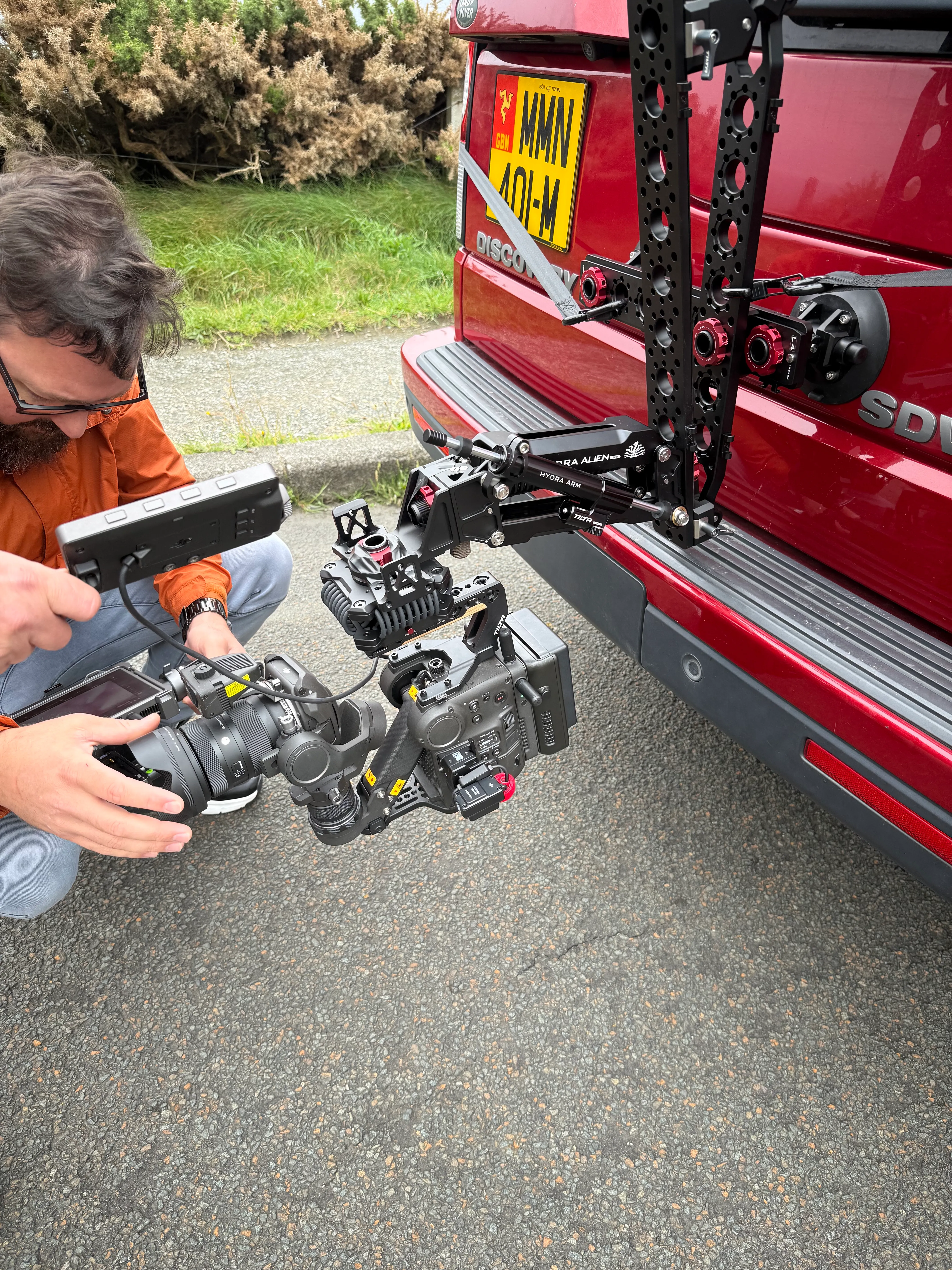
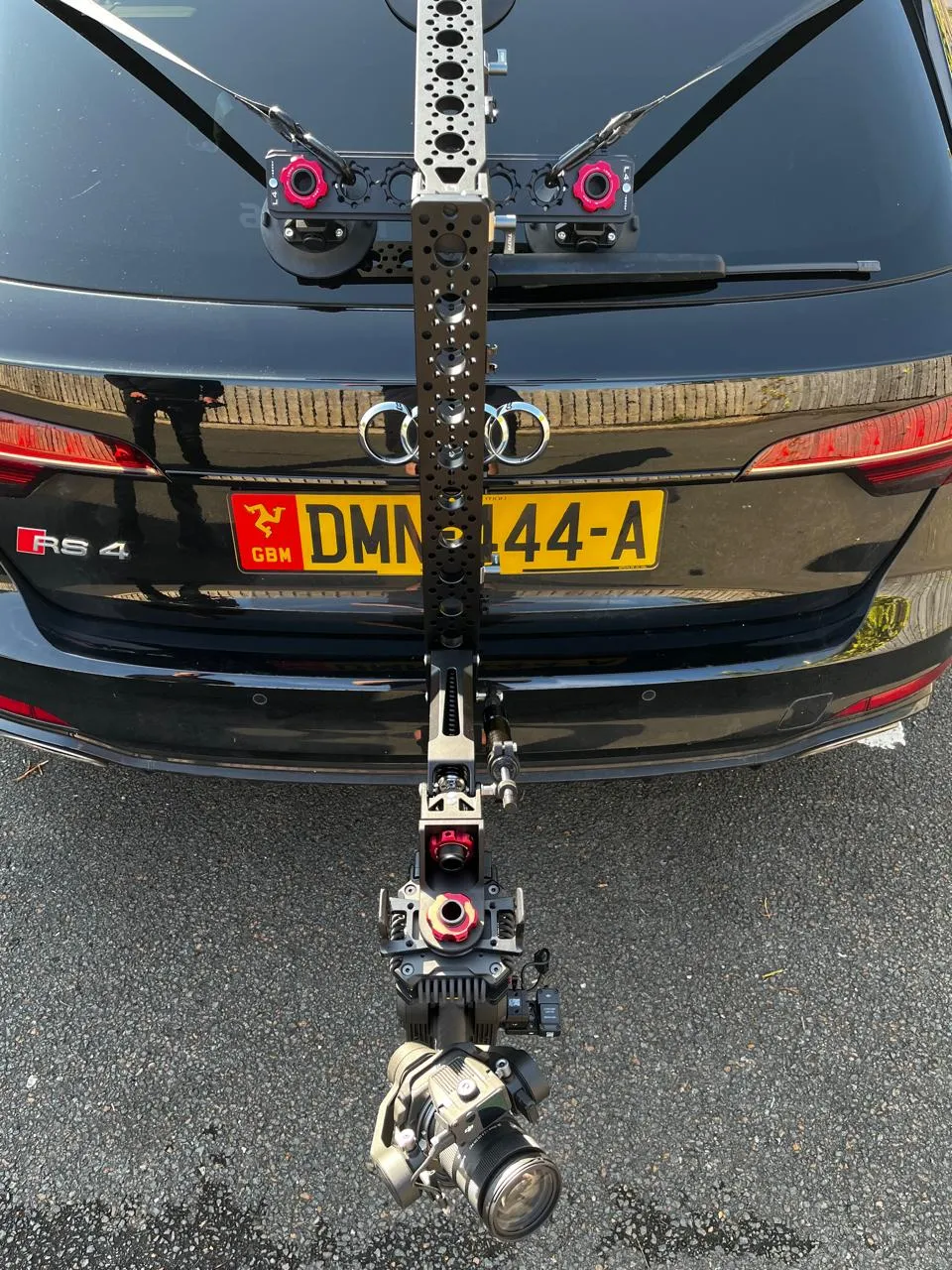
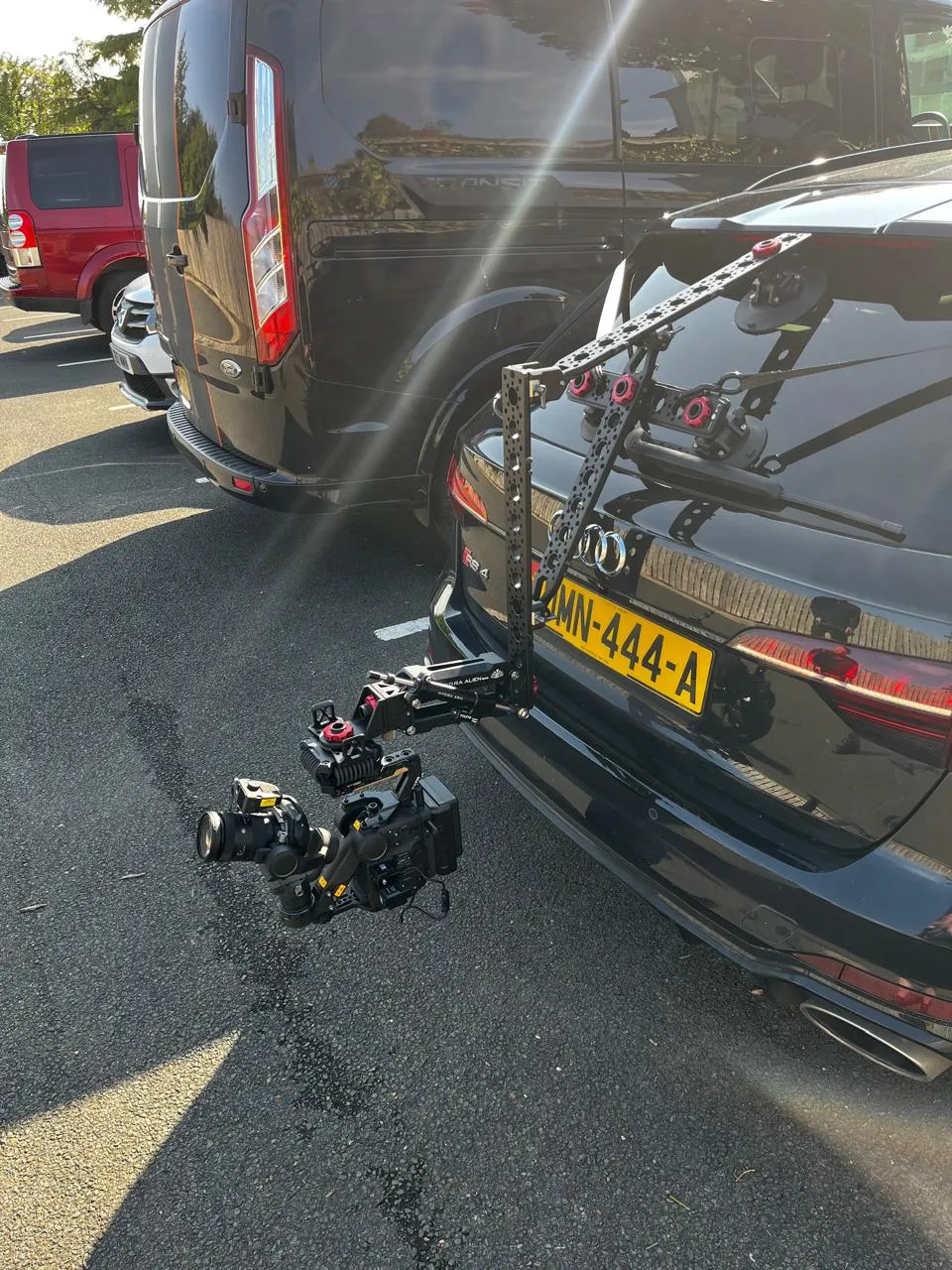
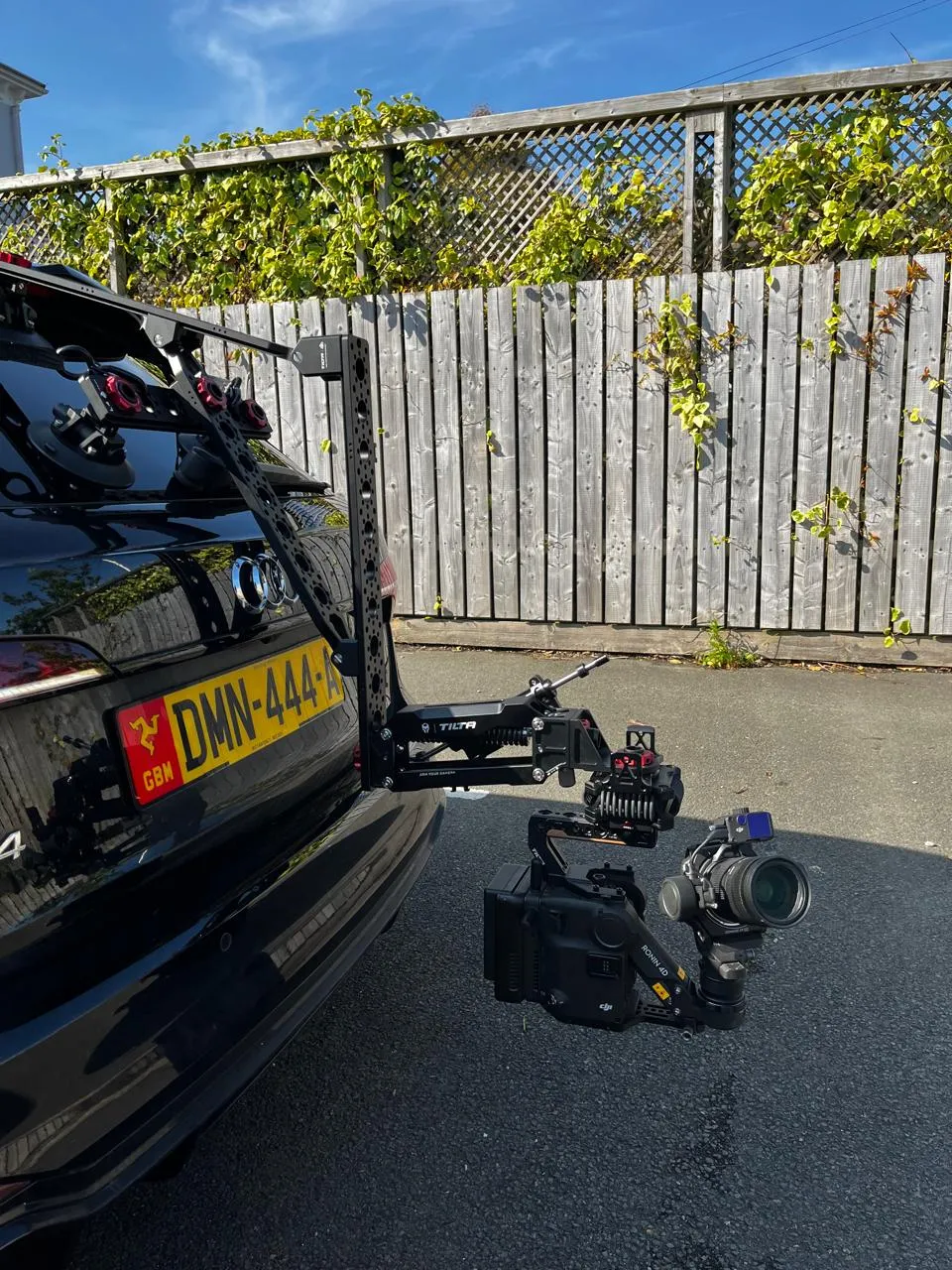
The Hydra Alien is a vehicle-mounted arm designed specifically for stabilised camera systems.
It attaches to a vehicle using a system of mounting rails and heavy-duty suction cups. Those suction mounts create a secure mounting point on the exterior of the vehicle so the camera can sit outside the bodywork while the vehicle is moving.
The arm itself includes a shock-absorbing mechanism with hydraulic damping. That means it absorbs vibration from the road before it reaches the camera.
In practice, the Hydra Alien becomes the first layer of stabilisation. It deals with the bumps, vibration and movement created by the vehicle itself before the camera's own stabilisation even starts working.
That is what makes the system viable for real driving conditions.
Why the Ronin 4D pairs so well with it
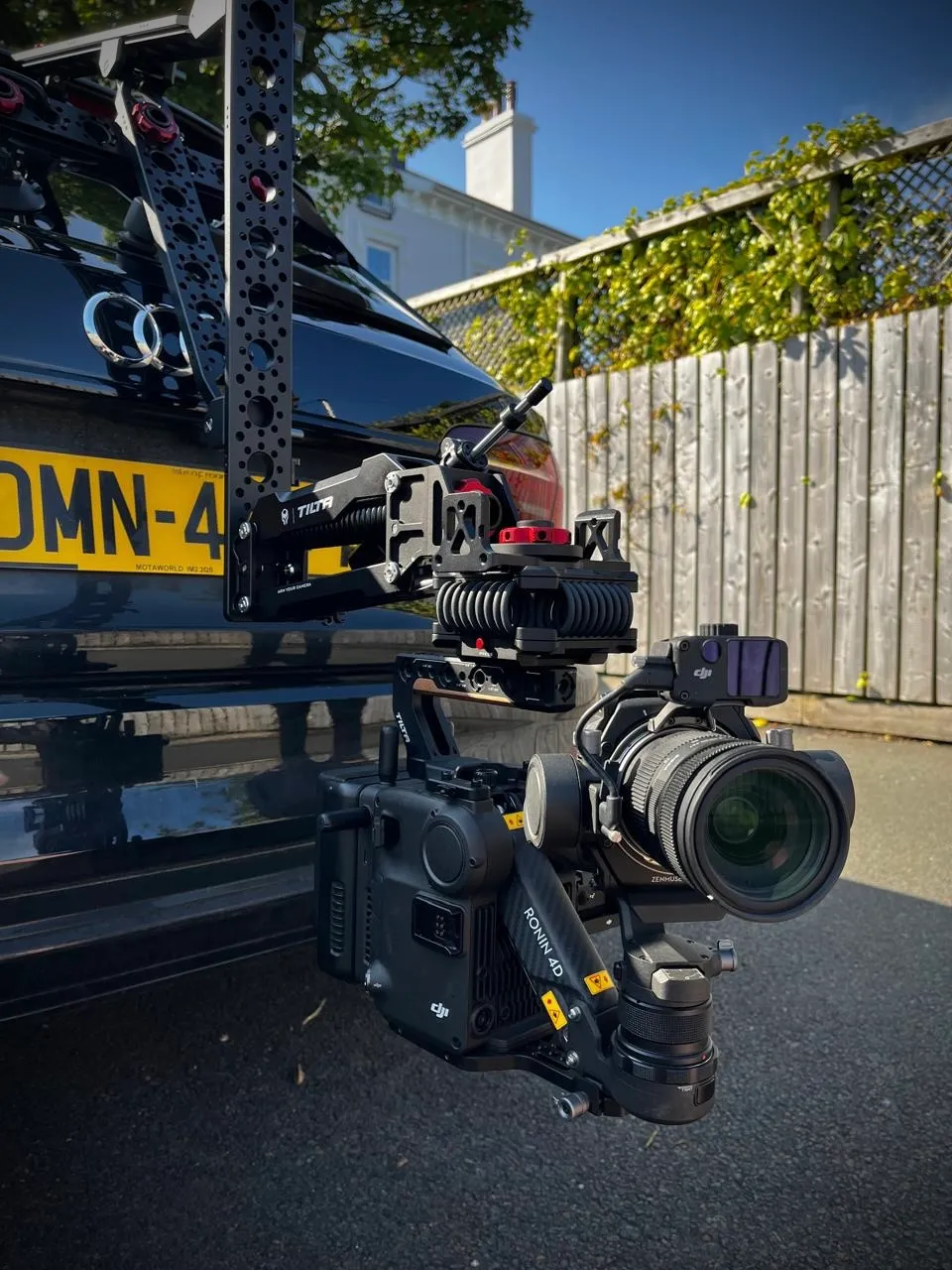
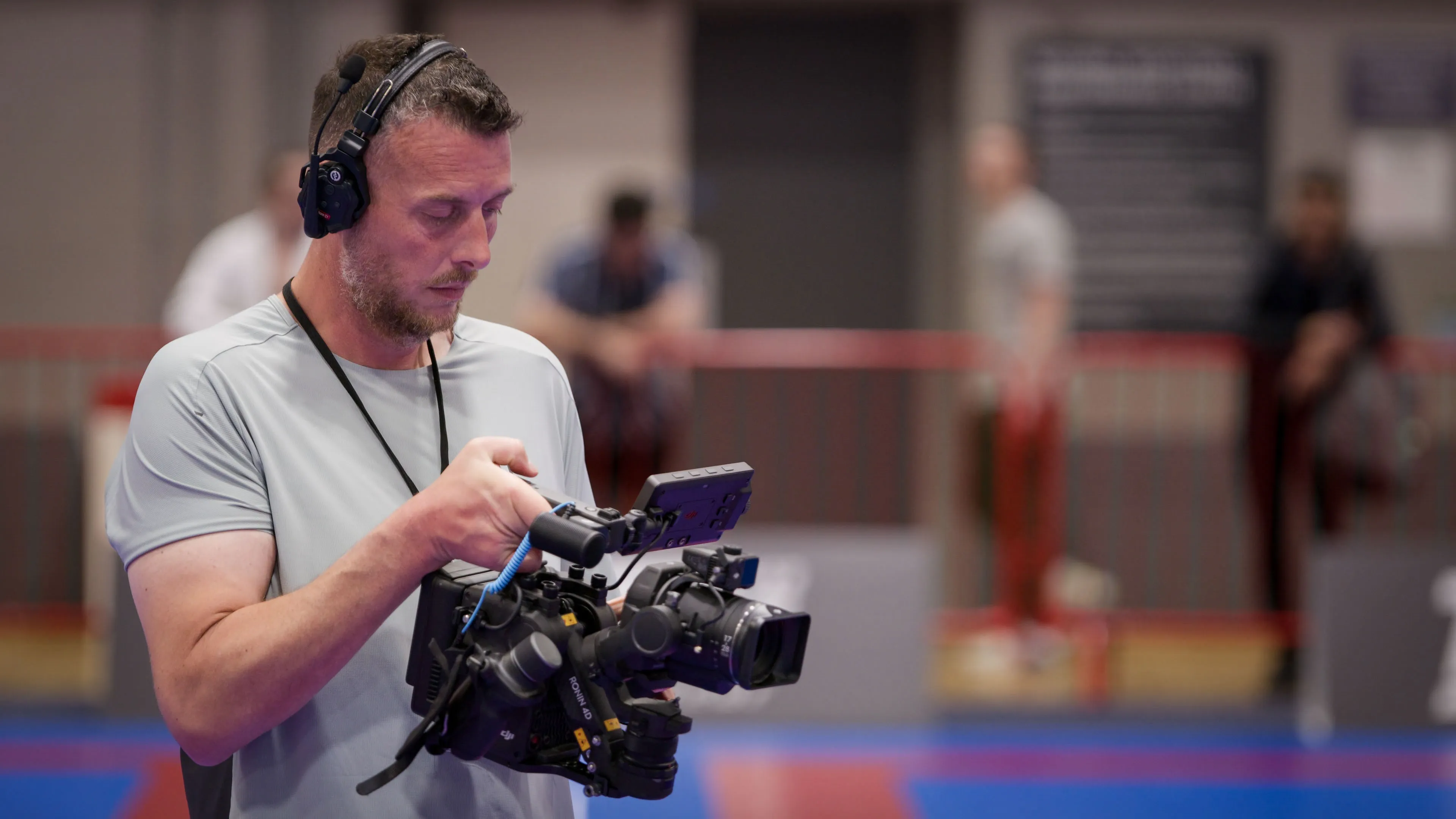
The DJI Ronin 4D works particularly well on this kind of rig because stabilisation is built directly into the camera system.
Instead of mounting a separate camera onto a gimbal onto a vehicle arm, the Ronin 4D combines those systems into one unit. The camera, gimbal stabilisation and focus system all travel together.
This keeps the payload lighter and the rig simpler.
More importantly, it gives you two layers of stabilisation working together. The Hydra Alien arm absorbs the larger mechanical shocks from the road, while the Ronin 4D's internal stabilisation smooths the remaining movement.
The result is footage that feels controlled even when the car is travelling over imperfect surfaces.
Controlling the camera from inside the vehicle
One of the biggest advantages of this setup is how the camera is operated.
We use the Ronin 4D high-bright monitor to control the camera remotely. The monitor provides a clear live view and allows us to adjust settings while the camera is mounted outside the vehicle.
That means the operator can remain safely inside the car rather than leaning out of a door or window trying to control the shot.
It also makes the setup far more practical in real production environments. Busy roads, moving traffic and tighter locations all become easier to manage when the operator is not physically attached to the rig outside the vehicle.
It is simply a safer and more controlled way to work.
The role of the GPS unit
We also run the Ronin 4D GPS module when using the camera on vehicle mounts.
The GPS system feeds motion data into the stabilisation system, helping the camera understand the direction and movement of travel more accurately. When the vehicle accelerates, brakes or changes direction, the stabilisation system can respond more intelligently.
It does not eliminate every vibration or movement. Road conditions still matter and no rig can completely cancel physics.
But in practice it improves consistency and helps the stabilisation behave more predictably when the camera is travelling at speed.
The reality of car-mounted shooting
Vehicle-mounted filming will never be completely effortless.
Rigging takes time. Surfaces need to be cleaned and checked. Mounting points need to be tested properly before driving anywhere. Safety straps and backup measures are essential.
And even with a good rig, road surfaces and speed will always influence the shot.
But compared with older methods, the difference is huge.
This setup is safer, more repeatable and far more controlled than the improvised solutions that were common in the past.
And crucially, it means the camera team can focus on the shot rather than worrying about the rig.
What this enables creatively
The real benefit is what it unlocks creatively.
Vehicle-mounted cameras allow you to capture movement that simply cannot be achieved from the roadside. The camera can travel with the subject, creating shots that feel immersive rather than observational.
That opens up possibilities like:
- low tracking shots alongside vehicles
- forward and rear-facing chase shots
- moving product shots through real environments
- dynamic brand film footage that feels cinematic
- motion sequences captured without large film-rig setups
These shots bring a sense of scale and energy to brand films and campaign content that static coverage cannot replicate.
How we use it in production
At DotPerformance, we use the Hydra Alien arm with the Ronin 4D whenever a project benefits from camera movement that travels with the subject.
That might be automotive work, product launches, brand films or campaign sequences where the environment and motion are part of the story.
With the camera mounted externally, the high-bright monitor controlling it from inside the vehicle and the GPS unit assisting stabilisation, the system gives us a practical way to capture those shots safely.
It is not perfect every time. No vehicle rig is.
But it beats the alternative of someone hanging out of a moving vehicle with a camera, which is not only unsafe but often illegal.
For us, it is simply a better way to get the shot.
Planning a moving shot?
If you are planning a campaign, brand film or product shoot that involves vehicle movement and want to pressure-test the production approach before filming, get in touch.