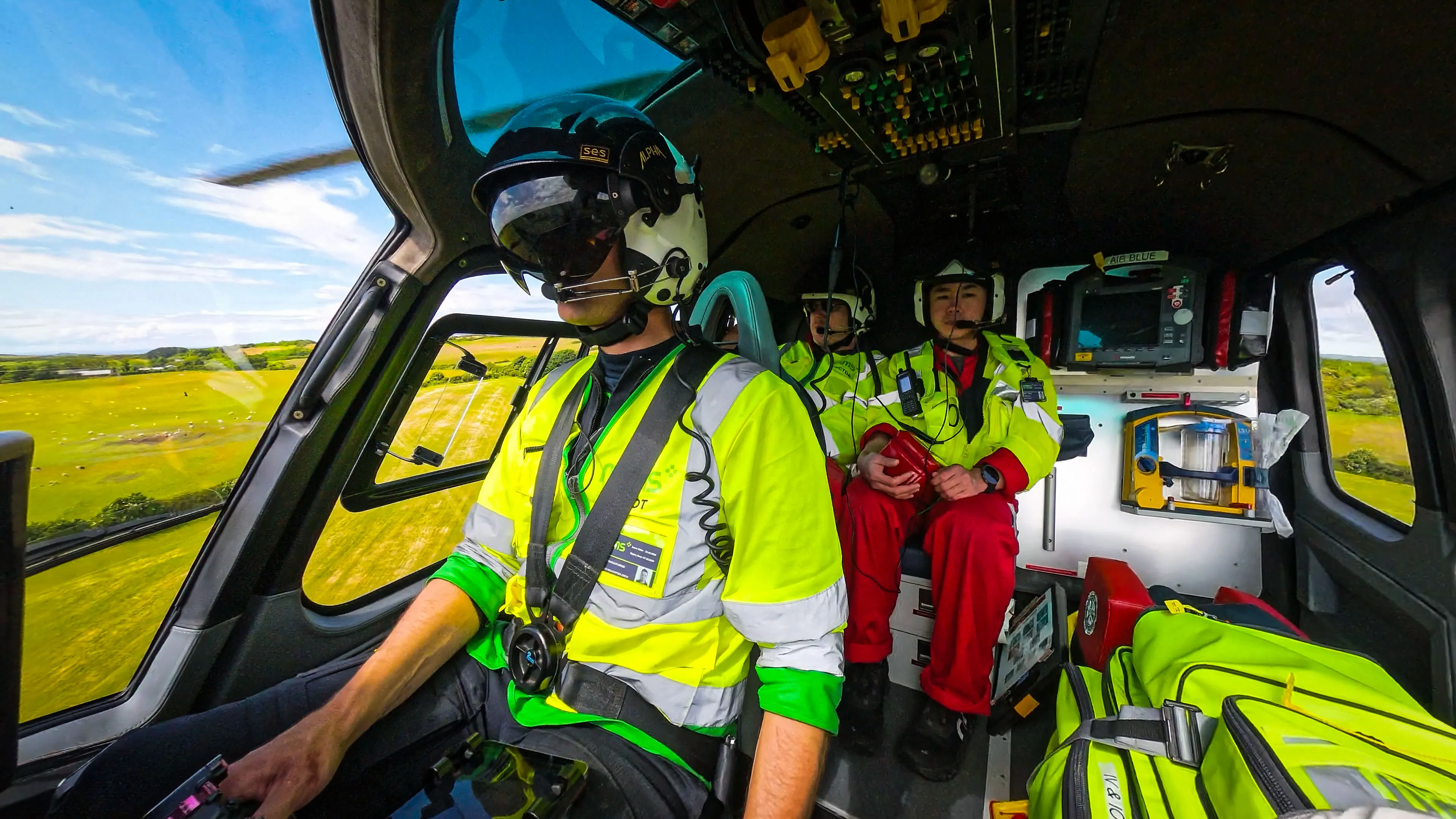
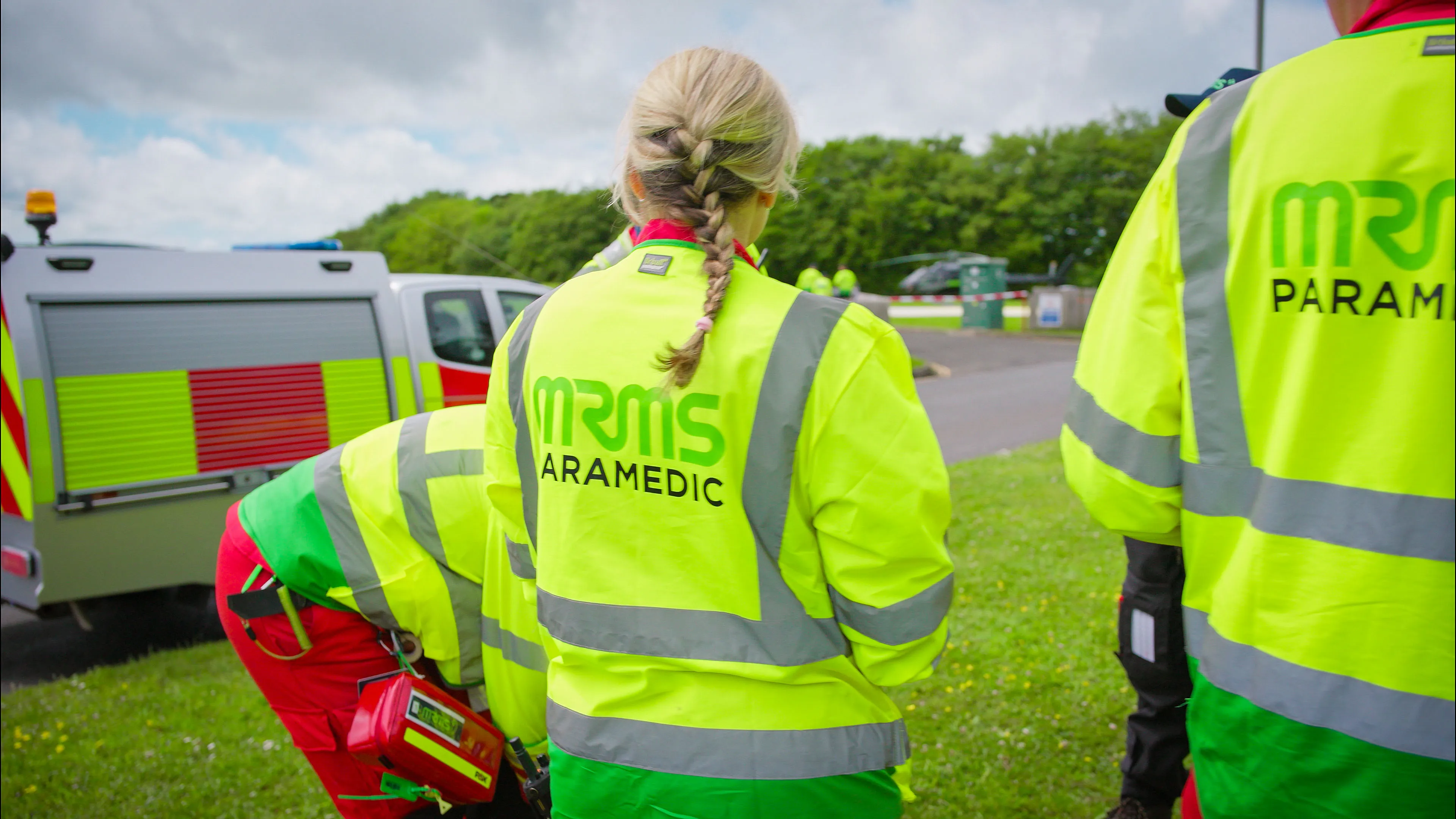
It's race-day morning and the roads close in two hours. Seventy locations around the Mountain Course need crewing, from fixed posts at the corners, to ambulances, rapid response vehicles (RRVs) and the Helimed helicopter. Each has its own minimum crew and its own rules about who can fill it. An RRV needs a blue-light driver with certified training. Helimed posts need medics cleared for that role, with the certification to match. If one medic can't make it, a post can end up short, and whoever covers it has to be cleared for that specific job. Being free isn't enough.
Before this system, the puzzle was solved in Excel. Certificates came in by email and were filed by hand. Expiry dates sat in a spreadsheet, so knowing who was on date meant someone was sitting down to check. The rota was built in a separate workbook and rebuilt every time availability changed, with qualifications cross-checked from memory or from a different file. Experienced people made it work. It didn't scale, and it never flagged a problem by itself.
MRMS needed one system that knew who was qualified and used that to decide who could go where.
Certification and staffing for the medics who cover the course.
Read more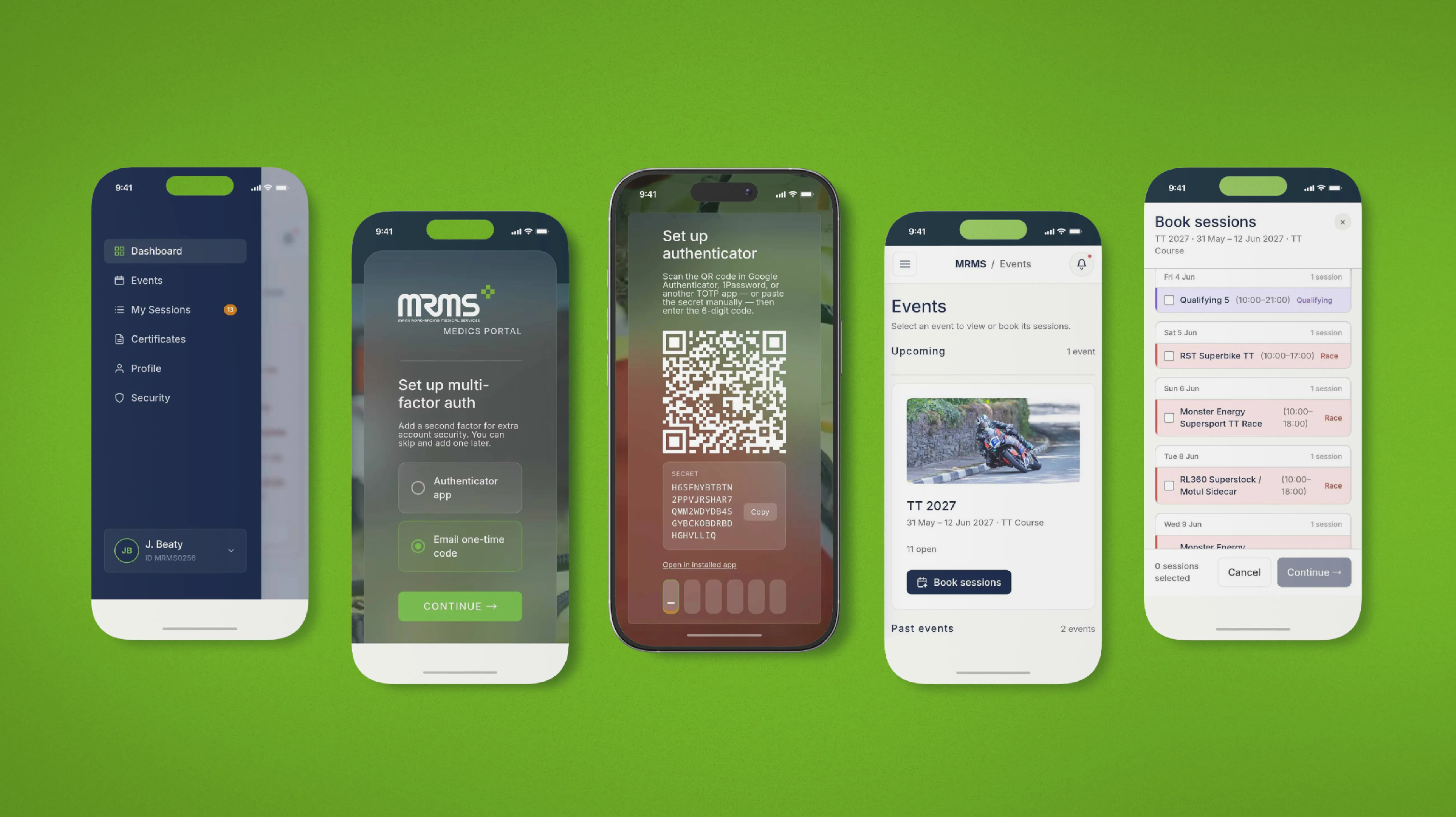
.webp?v=2026-10-14T14:53:59.373Z)
.webp?v=2026-10-14T14:53:59.083Z)
Built around how course medical cover actually works
We worked with the MRMS team to model how cover really runs on the TT and Southern 100 courses: the locations, the vehicle types, the crewing rules and the qualifications behind them. The first release had a fixed date, TT 2026, and the platform was designed so further modules could be added without a rebuild.
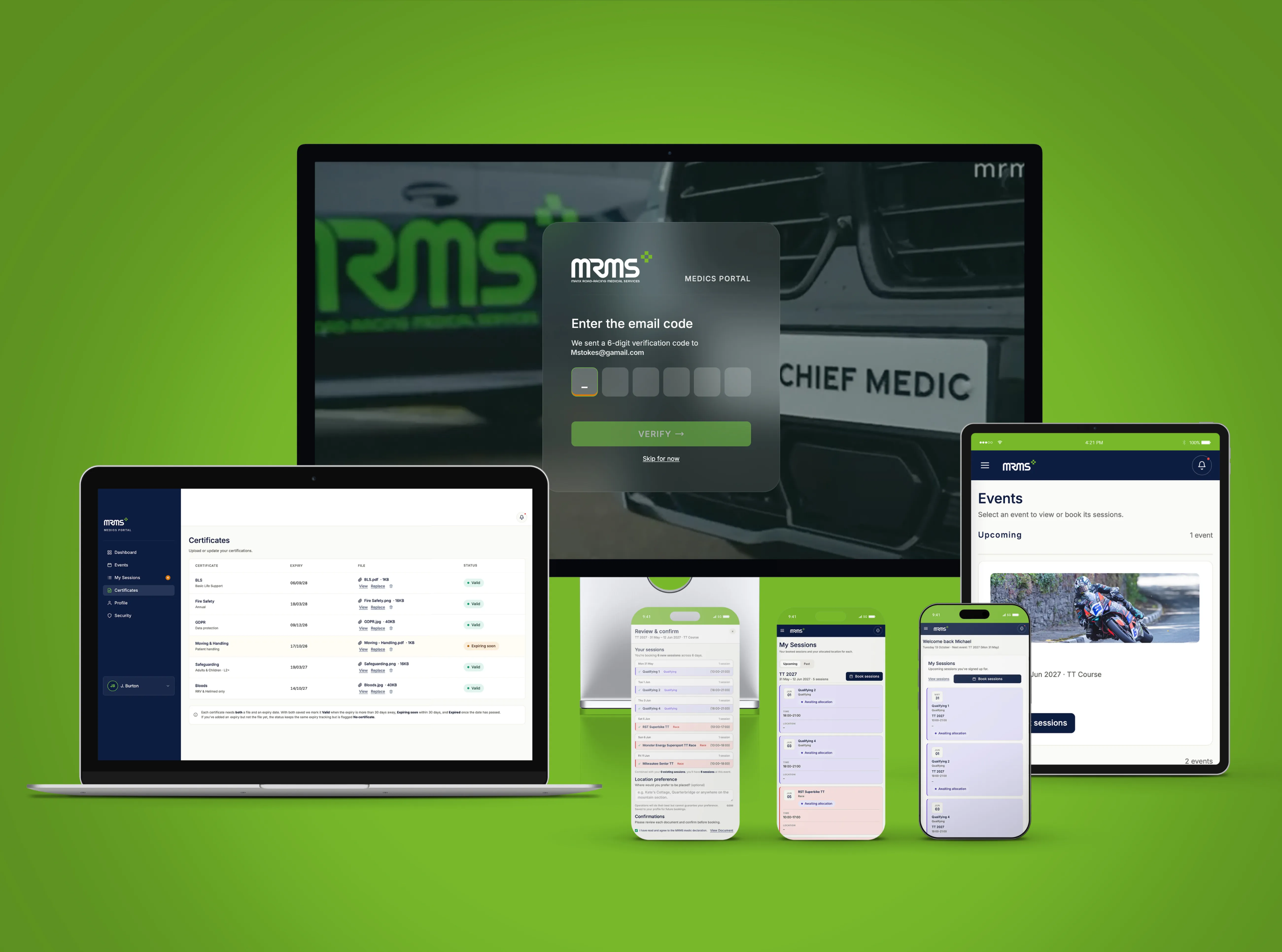
Secure access. Every login uses multi-factor authentication, either a one-time code or an authenticator app. Medical certification and personal documents sit behind it.
Profiles maintained by the people they describe. Records were seeded from MRMS's existing data and then handed over. Doctors and medics keep their own details, roles and qualifications up to date. New applicants register through the same flow.
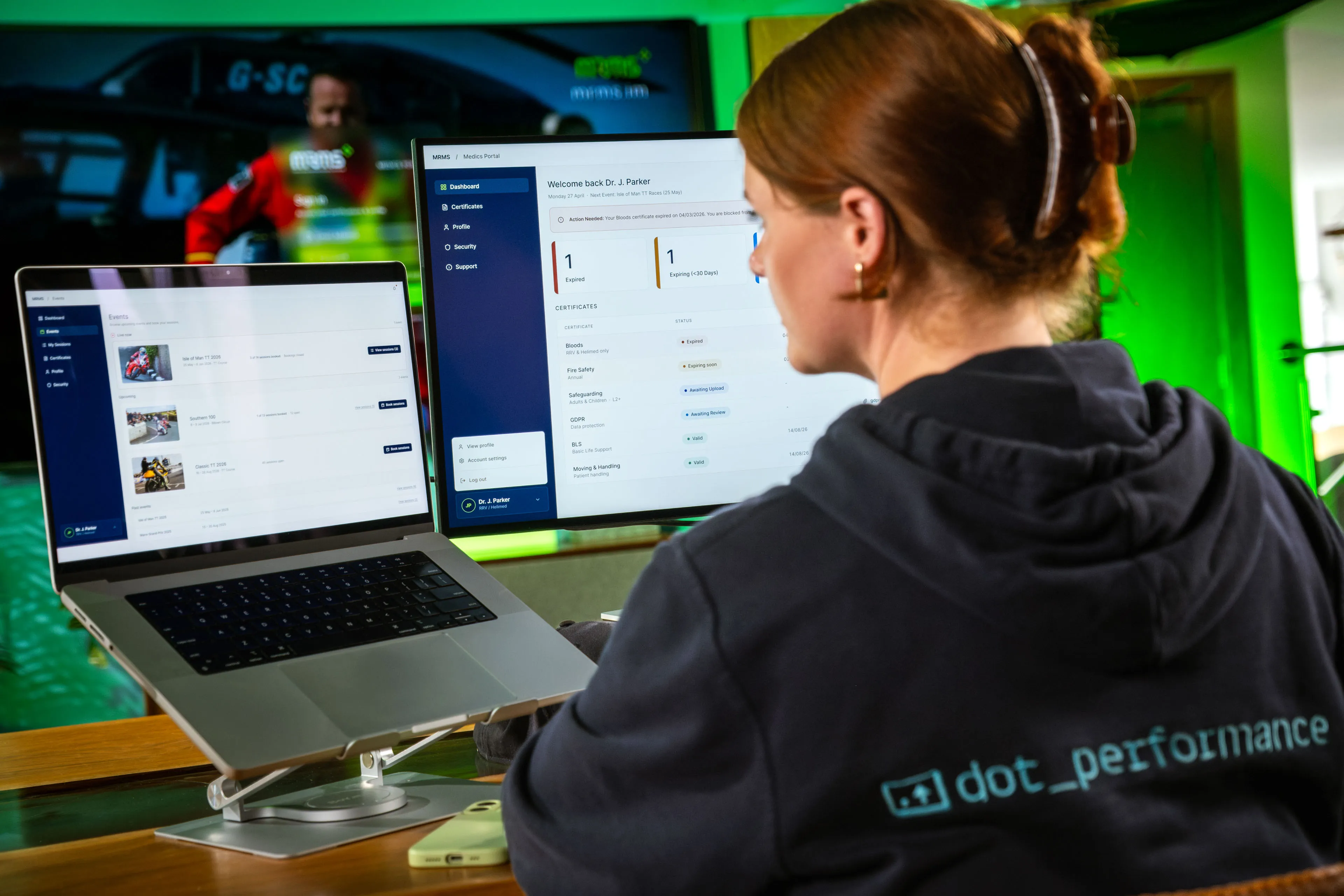
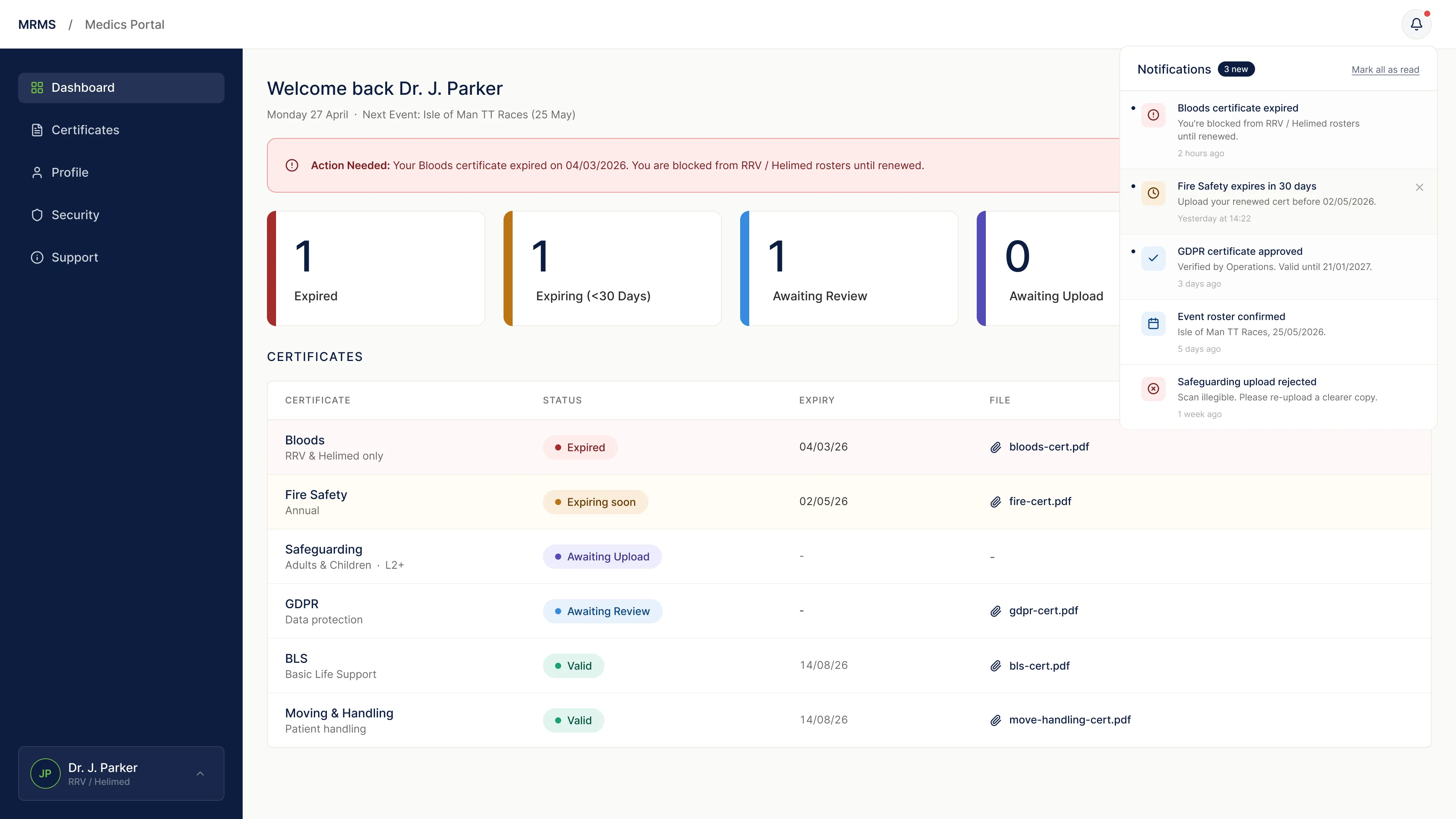
Certification as a live record. Each medic's certificates are held on their profile with expiry dates and securely uploaded evidence.
Automated reminders. An approaching expiry date or a missing document sends a reminder automatically, so renewals are prompted well ahead of time.
Admin oversight. Administrators get a dashboard showing certification status across the full medic roster, with tools to review it. Documents and reports that still need to leave the system can be exported.
The result is a single source of truth for medical qualification, kept up to date by the people who hold the qualifications.
Bringing staffing into the same platform
Qualifications that drive the rota. Every location has a type (fixed post, ambulance, RRV or Helimed), a minimum and recommended crew, and the roles it needs. A vehicle driven by MRMS needs a CERAD-trained blue-light driver, and that slot is filled first. RRV and Helimed posts need medics cleared for those roles. When an administrator adds a medic to a location, the list only shows people who meet that location's requirements, so the rota can't be built around a gap in someone's qualifications.
Self-service booking. Medics choose an event, book the sessions they can cover and give a location preference. They can add sessions or release ones they can no longer do. Operations allocates the location and the medic is notified.
Live staffing by location. One screen shows who is assigned where. Each location is marked red, amber or green against its minimum and recommended crew, and moving a medic updates it straight away.
On-the-day check-in. Each medic is marked present or no-show at their post. Someone who signs on at a different location is recorded as moved, not missing. When the session is over, attendance is finalised and locked.
An audit trail on every move. Every reallocation is recorded with who was moved, from where, to where, when and by whom.
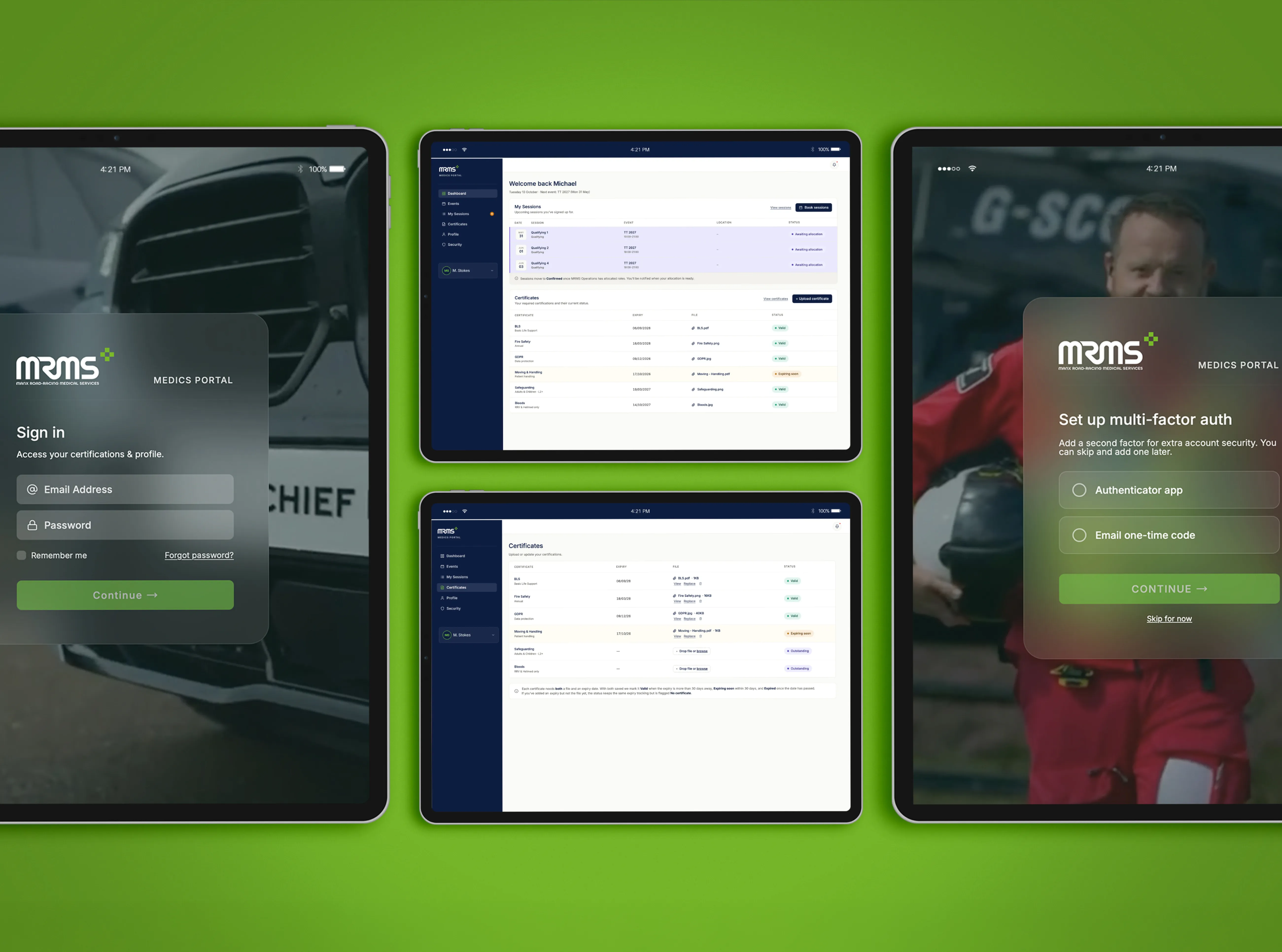
What changed
Certification is now a record that keeps itself current. Reminders go out automatically, and the status of the whole roster can be read at a glance instead of being pieced together.
The rota knows the rules. A Helimed slot can only be filled by someone cleared for Helimed, a vehicle only goes out with a qualified driver, and an under-crewed location shows red while there's still time to fix it. Self-service booking takes routine scheduling off the administrators and gives medics direct control of their own availability.
Qualification and staffing now share one source of truth, so whichever part of the operation comes onto the platform next starts from what's already there.